

New 10 Hot Air Balloon Couple AI Prompts for Intimate Sunrise Flights with Soft Light
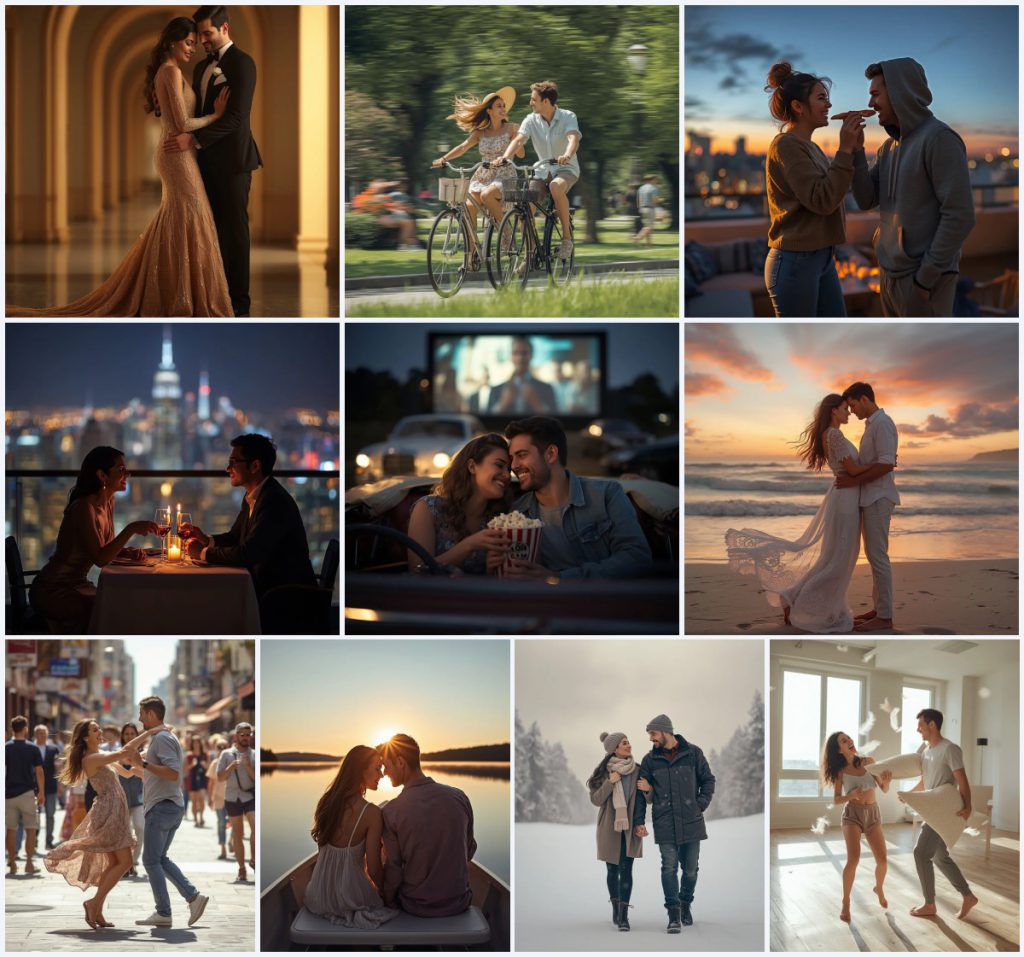
This collection brings together ten romantic couple scenes, each built around a shared moment and a warm, cinematic glow. The set is titled New 10 Hot Air Balloon Couple AI Prompts for Intimate Sunrise Flights with Soft Light, and the prompts range from a golden sequin gown in a grand hall to a pillow fight in a sunlit loft. Every prompt is written for full-body, ultra-realistic results with specific lens and lighting notes.
The common thread is intimacy: couples laughing, embracing, dancing, or simply sitting close while the light wraps around them. Each prompt names clothing, setting, and camera details so the generated image feels like a real photograph rather than a generic AI render. This article explains what the prompts contain, how to use them, and what to check before you post.
What these couple prompts are asking for
Each prompt in this collection is a full scene description that includes people, wardrobe, location, lighting, and camera settings. The prompts are designed for full-body compositions, so the couple's pose and the surrounding environment both matter. The lighting is almost always warm and directional, whether it is golden hour on a beach or candlelight on a rooftop. The results aim for ultra-realistic textures and an emotional, cinematic mood.
- A couple in a specific pose, such as an embrace, a dance spin, or sitting close in a boat.
- Detailed wardrobe: a rose-gold sequined gown, a black tuxedo, a breezy sundress, a wool coat, or loungewear.
- A named location: a luxury grand hall, a lush green park, a rooftop terrace, a drive-in theater, a snowy landscape, or a sunlit loft.
- Lighting direction and quality: warm golden light from a side window, golden hour glow, candle flicker, or soft diffused winter light.
- Camera details like 35mm, 50mm, 70mm, or 85mm lenses with apertures such as f/1.4, f/1.8, f/2.0, or f/2.8.
- Resolution and dynamic range notes: 8K resolution and HDR for depth and detail.
The shared scene across the collection
The collection moves through many settings, but the emotional scene stays the same: two people who are comfortable with each other, caught in a moment that feels unposed. In the grand hall prompt, the man is "looking down at her lovingly while she smiles softly, her eyes closed, leaning her head against his chest." In the snowy landscape prompt, they walk "hand-in-hand through a pristine snowy landscape" while snowflakes fall around them. The rooftop dinner prompt places them opposite each other, "gazing lovingly into each other's eyes, a faint smile playing on their lips."
The light is the second character in every scene. The grand hall has "warm, cinematic golden light pours from a side window." The beach prompt uses "golden hour lighting wraps them in a warm, ethereal glow." The drive-in prompt relies on "soft, cinematic light from the screen." Even the pillow fight in the loft uses "bright, ambient lighting" to capture motion and joy. This consistent lighting language is what makes the set feel like one collection rather than ten unrelated images.
Why this collection works for couple photos
These prompts are built for people who want a romantic couple image without a studio shoot. The detailed wardrobe and location notes give the AI enough to work with, while the pose and lighting instructions keep the result emotional rather than stiff. The camera settings also help the model understand depth of field and perspective, which improves realism.
- The prompts specify full-body poses, so the couple's interaction and the environment are both visible.
- Lighting is described in terms of direction and mood, which guides the AI toward a cinematic rather than flat look.
- Camera lens and aperture details create natural depth of field, making the background blur feel photographic.
Three styles inside this prompt set
The collection covers three distinct styles, and each one stays within the prompt's own language. You do not need to add outside references; the prompts already describe the look. Choose the style that matches the reference photo you plan to edit.
The first style is elegant cinematic romance, seen in the grand hall and rooftop dinner prompts. The second is playful candid daylight, seen in the cycling, dancing, and pillow fight prompts. The third is golden hour serenity, seen in the beach, boat ride, and snowy landscape prompts. Each style uses its own lighting and wardrobe cues, so keep the prompt text intact when you generate.
- Elegant cinematic romance: The grand hall and rooftop dinner prompts use warm side light, formal wardrobe, and soft background blur for a high-fashion, emotional look.
- Playful candid daylight: The cycling, dancing, and pillow fight prompts use bright natural light, casual clothing, and motion to create a carefree, spontaneous feel.
- Golden hour serenity: The beach, boat ride, and snowy landscape prompts rely on golden hour or soft diffused light, flowing garments, and quiet poses for a tender, ethereal mood.
How to use these prompts step by step
Using these prompts is straightforward, but the order matters if you want a realistic result. Start by choosing the scene that matches your reference photo, then copy the prompt exactly as written. Upload your reference, generate, and inspect the output before you post. The steps below walk through the process from selection to final check.
- Pick the scene. Choose one prompt from the collection that matches the mood and setting you want, such as the rooftop dinner or the sunset beach.
- Copy the prompt. Copy the full prompt text exactly, including the lens, aperture, and lighting notes, because those details control realism.
- Upload a reference. Upload a clear photo of the couple you have the right to edit, preferably a full-body shot with even lighting.
- Generate the image. Run the prompt in your chosen tool and generate at least two variations so you can compare poses and lighting.
- Check hands and face. Zoom in on hands and faces first, because AI often distorts fingers, eyes, and teeth in couple compositions.
- Check the main object. Inspect the main object of the scene, such as the bicycle, the pizza slice, the popcorn bucket, the boat, or the pillow, to make sure it looks correct.
Choosing the right reference photo
The reference photo determines how much the AI has to invent. A clear, well-lit image gives the model better information about faces, body proportions, and clothing. Avoid photos with heavy filters or extreme angles, because those features can carry into the generated result and make it look unnatural.
- Use a full-body or three-quarter shot so the AI can map the couple's pose and height difference accurately.
- Choose even, soft lighting without harsh shadows on the face, since the prompts already add their own cinematic light.
- Keep the background simple so the AI can replace it with the scene you selected without leaving traces of the original.
Tools that handle these prompts well
Different tools interpret the same prompt in different ways. Some are better at faces, others at cinematic light, and others at preserving your reference photo. The table below compares four popular options and notes what each one does well for this collection.
| Tool | Access | Typical realism | Useful here for |
|---|---|---|---|
| ChatGPT | Free and paid tiers | Good for prompt writing and scene planning | Rewriting the sequin gown prompt into a shorter version while keeping the golden side light and full-body pose. |
| Google Gemini | Free and paid tiers | Good for text and image understanding | Checking whether your reference photo matches the rooftop dinner prompt's candlelit, low-key lighting. |
| Leonardo AI | Free tier with paid plans | Strong for cinematic and stylized renders | Generating the drive-in movie prompt with the screen glow and vintage car details intact. |
| Midjourney | Paid subscription | High realism and strong lighting | Rendering the sunset beach prompt with the flowing white lace maxi dress and golden hour glow. |
Tips for better results with these prompts
Small adjustments make a big difference when you generate couple images. The prompts already include materials and objects, so use those details to guide your edits. The tips below focus on the specific items named in the collection.
- When generating the grand hall prompt, keep the rose-gold sequined gown and black tuxedo in the prompt, because removing either one breaks the elegant contrast.
- For the cycling prompt, mention the bikes with small baskets, since that detail anchors the playful park scene and gives the AI a clear prop.
- In the pillow fight prompt, keep the feathers flying and the large windows with city views, because those two elements create both motion and depth.
Common issues and what to change
Even with detailed prompts, some failures are common. The table below lists issues this collection can actually produce and the specific change that helps. Most fixes involve simplifying the prompt or regenerating with a clearer reference.
| Issue | What to change |
|---|---|
| Faces look distorted or merged | Upload a sharper reference photo and reduce the number of people in the frame to two. |
| Hands have extra fingers or awkward poses | Add a note to keep hands relaxed and visible, or crop the composition so hands are less prominent. |
| The main object looks wrong, such as a bicycle with strange wheels | Reinforce the object in the prompt and generate again with a higher resolution setting. |
| Lighting feels flat instead of cinematic | Keep the original lighting clause, such as golden hour or candle flicker, and avoid adding new light sources. |
Frequently Asked Questions
Can I use these prompts with my own couple photo?
Yes, as long as you have the right to edit the photo. Upload it as a reference and keep the prompt's pose and lighting instructions intact for the best result.
Which prompt in this collection is easiest for beginners?
The rooftop pizza prompt is a good starting point because the casual clothing and simple pose are forgiving, and the golden hour lighting hides small errors.
Do I need to include the lens and aperture details?
Yes, details like 35mm, f/2.0, and 8K resolution help the AI create natural depth of field and sharper textures, so keep them in the prompt.
Conclusion
This collection gives you ten complete scenes, each with its own wardrobe, location, lighting, and camera language. The variety means you can match a prompt to almost any couple photo, whether the mood is elegant, playful, or serene. Start with the scene that fits your reference, copy the prompt exactly, and check hands, face, and the main object before you share the result.
Edit only photos you have the right to edit, and respect the people in them.