

New 10 AI Prompts for Women’s Modern Minimalist Design Aesthetics
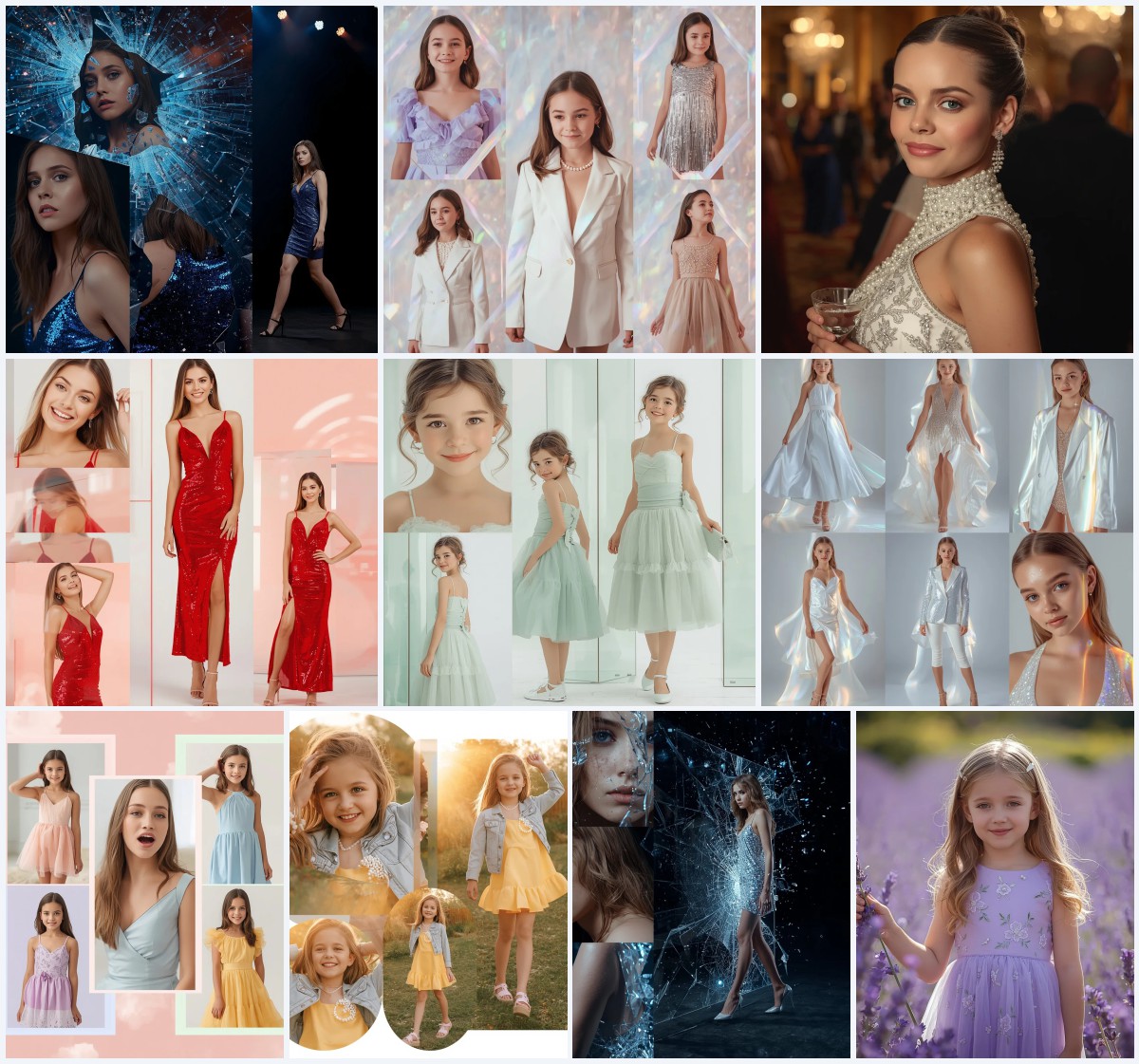
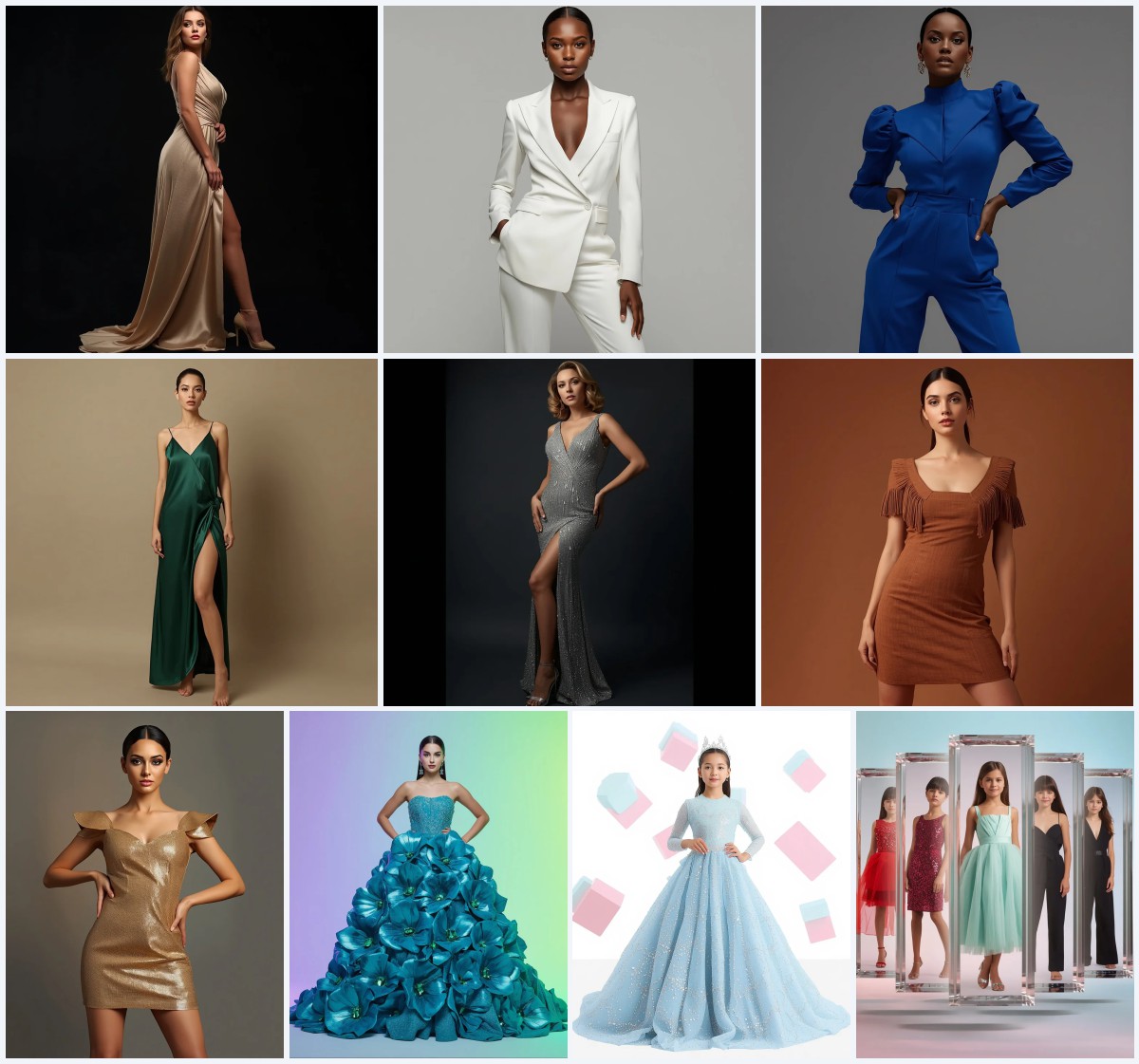
Modern minimalist fashion photography has become a powerful way to present a woman's style without visual noise. This collection of ten AI prompts focuses on clean lines, restrained palettes, and carefully chosen garments that let the subject carry the image. Each prompt asks for an ultra-realistic or editorial result, often anchoring the woman's identity to an uploaded reference photo.
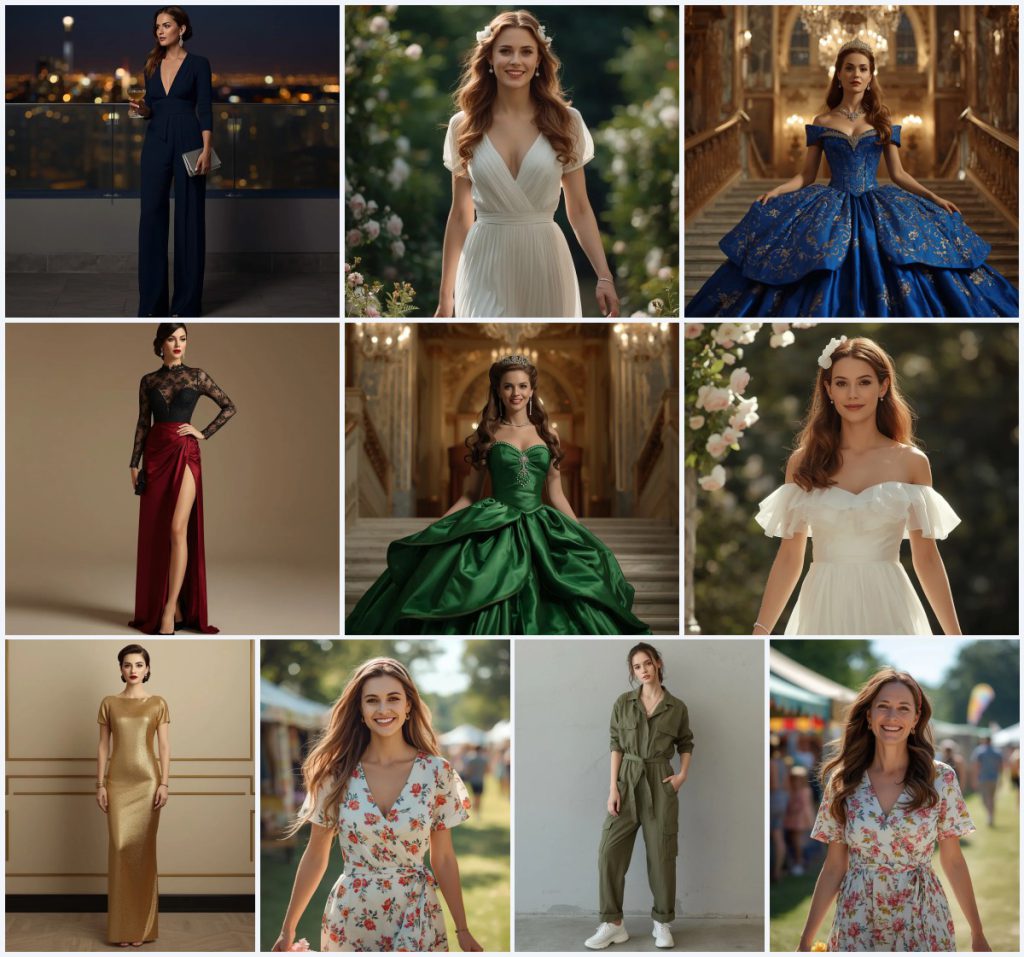
The set moves across several distinct scenes: a rooftop gala, a garden party, an opera house ball, a royal gala, a black-tie event, a countryside festival, and a clean urban wall. Some prompts lean into opulence with brocade and satin, while others stay grounded in linen and cotton. Together they show how minimalist design aesthetics can stretch from quiet elegance to full cinematic drama.
What this minimalist fashion prompt collection asks for
These prompts are built around a single woman, a specific outfit, and a controlled environment. The wording often repeats the instruction to use the uploaded reference image strictly as the only face reference, which keeps facial identity, structure, skin tone, and age consistent across generations. The clothing descriptions are precise about fabric, neckline, sleeve length, and silhouette, so the AI has less room to invent unwanted details.
- A wide-leg navy blue jumpsuit with a structured bodice, deep V-neck, long sleeves, and luxurious crepe fabric
- A knee-length white pleated midi dress with short sleeves, a modest V-neck, and a flowing skirt
- A floor-length royal blue brocade ball gown with a sweetheart neckline and gold floral patterns
- A black lace bodice with long sleeves paired with a crimson silk skirt with a dramatic high slit
- A shimmering gold lamé column gown with a boat neckline and a subtle train
- An olive green linen utility jumpsuit with cargo pockets, a belted waist, and rolled-up sleeves
The shared scene and recurring atmosphere
Across the collection, the woman is placed in spaces that feel curated rather than crowded. The rooftop prompt describes her "standing elegantly on a rooftop terrace overlooking a city skyline at night, holding a cocktail." The garden prompts place her "walking gracefully amidst blooming flowers in a lush garden, bathed in soft sunlight." The grander pieces move indoors, with one woman "poised at the top of a sweeping marble staircase in a lavish opera house" and another in a "lavish royal palace."
Even the more casual setups keep a composed mood. The countryside festival prompt shows her "casually strolling through a sunny countryside festival, perhaps holding a bunch of fresh flowers," while the utility jumpsuit prompt uses a "clean, urban concrete wall" as a modern backdrop. The black-tie prompt keeps the background as a "softly lit, luxurious interior." In every case, the setting supports the outfit instead of competing with it.
Why this collection works for modern minimalist aesthetics
These prompts are useful because they treat minimalism as a discipline of selection rather than a lack of detail. Each image has one clear subject, one outfit, and one mood, which makes the results easier to read and easier to reuse across a portfolio or social feed.
- The prompts specify fabric and cut, such as crepe, brocade, satin, lamé, lace, silk, linen, and cotton, which grounds the image in believable texture
- The face-reference instruction protects the subject's identity, making the set suitable for personal branding or consistent character work
- The range of scenes, from rooftop night to sunlit garden to marble staircase, lets one visual language cover both everyday elegance and formal drama
Three styles inside this prompt set
This collection works in three styles, and each one stays inside the wording of the prompts themselves. You are not asked to leave the described scene or swap the garment; the variation comes from how the AI renders light, fabric, and pose within the same instructions.
- Cinematic realism: The prompts ask for ultra-realistic, high-resolution results with controlled lighting, as in the rooftop terrace at night or the softly lit luxurious interior.
- Ethereal garden softness: The white midi and off-shoulder dress prompts use soft sunlight, blooming flowers, and romantic waves to create a gentle, airy mood.
- Opulent editorial grandeur: The brocade, emerald, and gold lamé prompts lean into marble staircases, crystal embellishments, and jewel-toned fabrics for a formal, magazine-like presence.
How to generate these images step by step
A reliable workflow keeps the face consistent and the outfit readable. Start with the prompt text, add your reference image, and review the output against the specific garment and scene details before you accept it.
- Choose one prompt. Pick a single look from the collection, such as the navy jumpsuit or the white pleated midi dress, so the AI is not asked to blend two outfits.
- Copy the prompt. Copy the full prompt text exactly, including the fabric, neckline, and scene descriptions, because those clauses control the final composition.
- Upload a reference image. Upload a clear, well-lit portrait as the face reference and confirm the tool is using it as the only face reference.
- Generate the image. Run the generation at high resolution and, if the tool allows, request an ultra-realistic or cinematic style to match the prompt wording.
- Check hands, face, and main object. Inspect the hands for extra fingers, the face for identity drift, and the main object, such as the cocktail, the bouquet, or the clutch, for shape errors.
- Refine and save. If the outfit or background is off, adjust one clause at a time rather than rewriting the whole prompt, then save the best result.
Choosing the right reference photo
The reference photo does most of the identity work, so it should be simple and honest. A clean portrait gives the AI fewer conflicting signals when it applies the hairstyle, makeup, and outfit described in the prompt.
- Use a front-facing or slightly angled portrait with even lighting and no heavy shadows across the face
- Avoid sunglasses, hats, or hands covering the face, because the prompts rely on visible facial structure and skin tone
- Choose a neutral expression that matches the prompt's mood, whether serene, joyful, or poised, so the generated face does not fight the scene
Tools that handle these prompts well
Different platforms interpret long fashion prompts in different ways. The table below compares four common tools against the needs of this collection, especially the face-reference instruction and the detailed garment descriptions.
| Tool | Access | Typical realism | Useful here for |
|---|---|---|---|
| ChatGPT | Web and mobile, paid tiers for image generation | Good to high, improving with each model | Rewriting the navy jumpsuit prompt into a shorter version while keeping the crepe fabric and diamond drop earrings |
| Google Gemini | Web and mobile, free and paid tiers | High for photorealistic portraits | Handling the reference-image instruction for the white pleated midi dress and the garden setting |
| Leonardo AI | Web, free credits and paid plans | High, with strong cinematic presets | Rendering the emerald green ball gown with the voluminous satin skirt and tiara detail |
| Midjourney | Web and Discord, paid subscription | Very high, especially for editorial fashion | Producing the gold lamé column gown with the boat neckline and art deco wall background |
Tips for cleaner minimalist results
Small adjustments to the prompt and the reference can make a large difference in how polished the final image looks. Keep the focus on the garment and the scene, and let the AI handle the rest.
- If the navy blue jumpsuit looks flat, add a note about crepe fabric drape and soft directional light on the rooftop terrace
- For the white pleated midi dress, keep the garden background simple so the pleats and the delicate white flowers remain the visual focus
- When generating the olive green linen utility jumpsuit, specify that the cargo pockets and belted waist stay visible against the concrete wall
Common issues and what to change
These prompts can fail in predictable ways, usually around hands, fabric, or facial consistency. The table below lists the most likely problems and the single change that fixes each one.
| Issue | What to change |
|---|---|
| The face does not match the reference photo | Restate that the uploaded image is the only face reference and reduce competing facial descriptions in the prompt |
| The gown or jumpsuit fabric looks plastic | Name the fabric again, such as crepe, brocade, satin, or lamé, and ask for soft, realistic light on the material |
| Hands are malformed around the cocktail or clutch | Simplify the hand pose or ask for the object to be held loosely at the side |
| The background overwhelms the outfit | Reduce background detail and keep the focus on the woman and the garment, as in the clean urban concrete wall setup |
Frequently Asked Questions
Can I use the same reference photo for all ten prompts?
Yes. The prompts are written to preserve the same facial identity, structure, skin tone, and age, so one clear portrait can work across the entire collection.
Which prompt is best for a formal event look?
The royal blue brocade gown, the emerald green ball gown, and the gold lamé column gown are the most formal, since they include marble staircases, jewel tones, and structured necklines.
Why do the prompts repeat the fabric details?
Fabric words like crepe, satin, brocade, lamé, lace, silk, linen, and cotton help the AI render believable texture instead of a flat, generic garment.
Conclusion
This collection shows that modern minimalist design aesthetics do not have to be plain. By pairing one clear outfit with one controlled scene and a strict face-reference instruction, each prompt produces a focused, elegant image that feels intentional. Whether you choose the rooftop gala, the garden party, or the marble staircase, the result stays clean, readable, and true to the woman in the photo.
Only edit and generate images from reference photos you have the right to use and modify.